
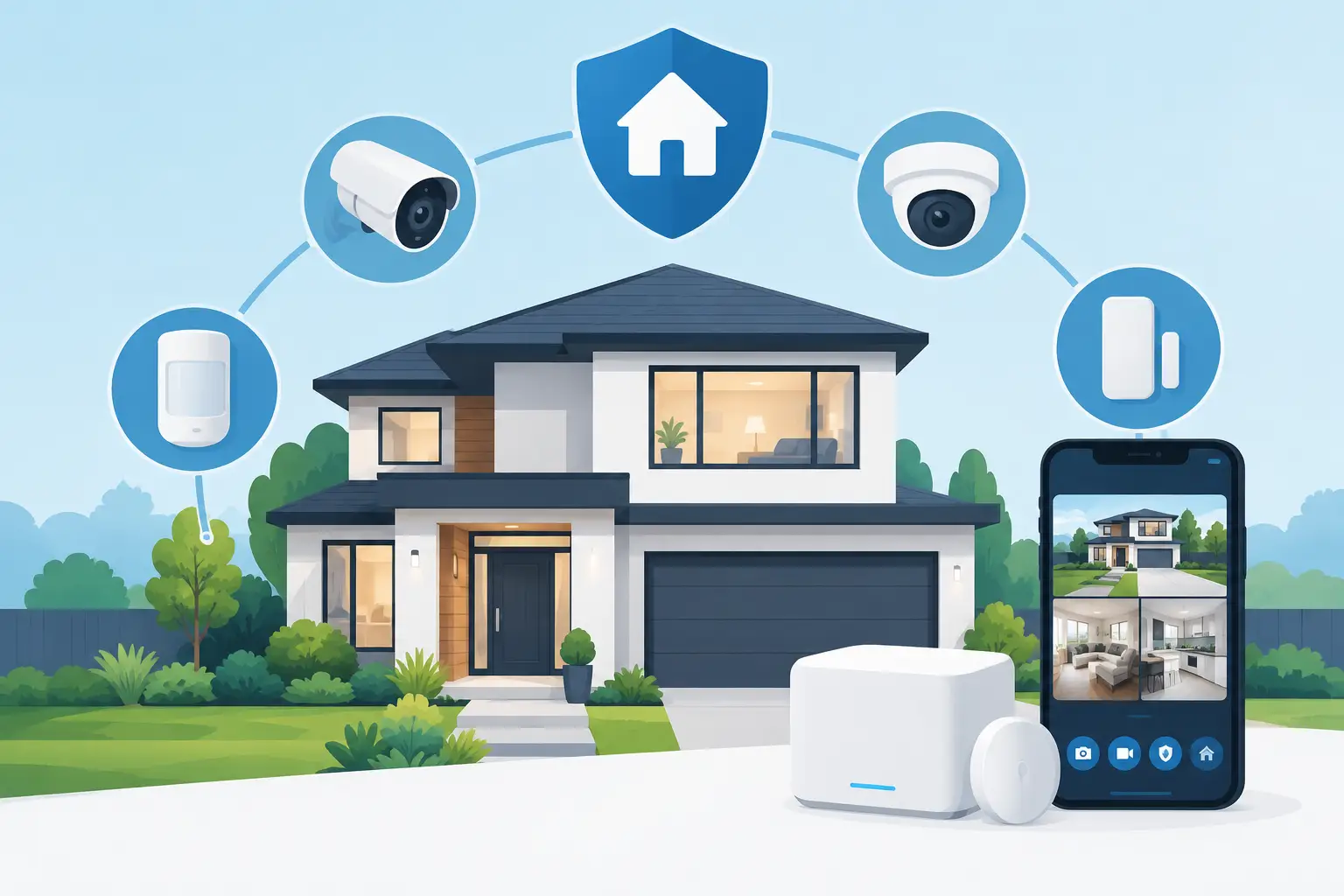
A front door alarm contact can tell you that someone entered a house. It cannot tell you whether a person is approaching the side gate at 2:00 a.m., whether a vehicle has stopped near the driveway, or whether a package delivery requires attention rather than a police response. That is the difference between a basic alarm package and a custom home security system design built around how your property is actually used.
For North Texas homeowners, meaningful protection starts before an intruder reaches the door. It requires a system that sees activity at the property edge, evaluates what matters, deters threats when appropriate, and gives professional monitoring agents the information needed to respond with confidence.
Start With the Property, Not a Package
A properly engineered security system begins with an onsite assessment. The goal is not to count doors and install a standard number of sensors. It is to identify how people, vehicles, deliveries, pets, contractors, and family members move through the property every day.
Driveways, side yards, pool gates, detached garages, rear entries, second-floor access points, and low-visibility areas all create different security requirements. A home on a large lot in Prosper may need perimeter awareness and long-range camera coverage. A townhome may benefit more from controlled entry, video verification, and a carefully placed camera that avoids recording neighboring private spaces.
The assessment should also account for practical conditions that affect reliability: landscaping that can obstruct a camera, changing sunlight, exterior lighting, Wi-Fi coverage, construction materials, and available pathways for low-voltage wiring. A camera with an excellent specification sheet is still ineffective if it is aimed through tree branches, mounted too high to identify a face, or dependent on an unstable wireless signal.
Protection Zones Should Match Real Risk
Most homes have three security zones. The outer zone includes driveway approaches, gates, yards, and exterior pathways. The middle zone includes doors, windows, garages, and areas where an intruder may attempt entry. The inner zone protects occupied spaces and high-value areas with motion detection, panic devices, glass-break detection, and environmental monitoring.
The outer zone is where proactive protection delivers its greatest advantage. AI-powered cameras can distinguish people and vehicles from routine motion caused by wind, animals, or moving shadows. Virtual tripwires and intrusion zones can then identify activity in the places that matter, such as a side gate after hours or a vehicle entering a private drive.
This is not a promise that every alert is automatically an emergency. It is a way to reduce noise and focus attention on credible events. Good design gives homeowners control over schedules, alert rules, and notification preferences while maintaining professional oversight for serious threats.
Design for Deterrence, Not Just Evidence
Traditional camera systems often function as passive recorders. They may provide footage after a theft, but they do little to discourage a person who is already on the property. An engineered system should create options for active deterrence.
When AI analytics identify a person crossing a defined perimeter, the system can trigger strategically located lights, strobes, or audible warnings. A professional monitoring agent can receive live verified video and assess the event before requesting emergency dispatch. That verification matters because it gives responders better information than a generic alarm signal and can help reduce false-alarm friction.
The response should be proportional to the event. A family returning home late should not trigger an aggressive warning sequence. A person entering a gated side yard at an unusual hour may warrant immediate escalation. Rules, schedules, credentialed access, and carefully defined detection areas make that distinction possible.
Video Placement Is an Engineering Decision
Camera quantity is not the same as camera coverage. Each camera should have a defined job: identify a person at an entry, capture vehicle activity at the drive, observe a gate, or monitor a vulnerable rear approach. Wide views are useful for situational awareness, but identification requires proper placement, lens selection, lighting, and resolution.
Night performance deserves special attention. Infrared illumination can help in darkness, but reflective surfaces, vehicle headlights, and poorly positioned exterior fixtures can degrade useful footage. In many cases, controlled white-light coverage improves both deterrence and video clarity. The best approach depends on the architecture of the home, neighborhood conditions, and the level of visibility desired after dark.
The Network Is Part of the Security System
A connected home security system is only as dependable as the network supporting it. Cameras, alarm panels, access control devices, mobile apps, smart locks, voice assistants, and streaming devices all compete for bandwidth and reliable connectivity. Treating the network as an afterthought creates delayed alerts, offline cameras, weak remote access, and frustrating daily operation.
Enterprise-grade network infrastructure separates critical security traffic from general household devices where appropriate, provides dependable coverage throughout the home, and supports secure remote management. Wired connections are preferred for fixed security devices whenever the property allows. They provide more consistent performance, avoid battery maintenance, and reduce dependence on congested wireless conditions.
Wireless devices still have a role. They can be practical for finished spaces, detached structures, and locations where wiring would be disruptive. The trade-off is that battery health, signal strength, and environmental conditions must be monitored. Custom design means selecting the right connection method for each device rather than forcing the whole property into one approach.
Control Access Without Managing Keys
Security is not only about stopping unwanted entry. It is also about managing authorized entry without giving up control. Smart access control can replace the uncertainty of physical keys with managed credentials, scheduled codes, mobile access, and detailed event history.
For homeowners, that can mean a temporary code for a dog walker, housekeeper, or contractor that expires automatically. For a home office, guest house, or private gate, it can mean assigning access by person and schedule rather than copying keys that may never be returned. The system should show who accessed a door and when, while allowing the homeowner to manage permissions from a smartphone.
Access control also works best when connected to video and alarm events. A door unlock can prompt a nearby camera to record. A forced-open condition can create an immediate alert. This provides context that a standalone smart lock cannot deliver.
Build Automation Around Safety and Daily Use
Smart-home automation should support security, not complicate it. The most useful automations are simple and intentional: arm the system at night, lock selected doors, turn on perimeter lighting when a camera detects activity, or receive an alert if a gate is left open.
Automation can also make protection easier to live with. A homeowner may want the alarm to disarm only after an authorized user enters through a specific door, or exterior lighting to follow a schedule that changes when the family is away. The right rules reduce repetitive tasks without creating confusion during an urgent event.
Avoid building a system around novelty features that no one will use six months later. Every automation should have a clear purpose, reliable operation, and an easy manual override. Total property protection still requires human control.
Ownership, Service, and Long-Term Reliability
A security system is a long-term part of the property, not a disposable consumer device. Hardware ownership, accessible system management, and responsive local support deserve consideration before installation. Low-cost proprietary equipment can appear attractive at the start, then become restrictive when service is slow, features are limited, or changing providers means replacing the entire system.
NDX Security designs systems around high-quality, non-proprietary hardware that customers own, backed by professional monitoring and local service. That approach protects the investment while allowing the system to evolve as the home, family, and security requirements change.
The final design should include a plan for testing, maintenance, user training, and backup communications. Homeowners should know how to arm and disarm the system, review video, manage users, and request help without navigating a confusing collection of separate apps.
A well-designed system does more than send alerts after something happens. It gives your household earlier awareness, credible verification, active deterrence, and clear control over who enters your property. The right next step is a property assessment that treats your home as its own security environment, because it is.